
In today’s organisations, it’s hard to imagine daily life without spreadsheets (I’ll let you replace this generic term with the name of your favourite software).
For the record, the first spreadsheet (Visicalc) was launched in 1979. For the price of a pocket calculator, this software enabled the microcomputer to free itself from the confines of Pacman, Pong or Donkey Kong and to enter the corporate world. Some people even claim that it is the spreadsheet that prompted IBM to design and market its first PC.
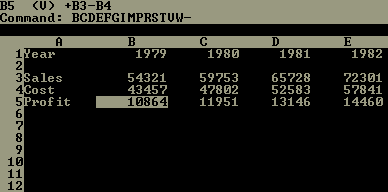
The rest is history.
Almost half a century later, while we salute the major and growing role played by this truly innovative tool, we have to admit that it has invaded every corner of our professional activities.
These more or less structured clusters of cells spread at dizzying speed, often out of control… which, in medical terms, is a pretty good definition of cancer.
Am I exaggerating? Perhaps not so much. Even if we overlook the fact that a large majority of these tabular constructions are misleading (cf. “88% of spreadsheets have errors“), the real tragedy lies elsewhere: in a hyper-connected and collaborative world, the spreadsheet is by nature a narrow-minded and autocratic egomaniac.
The flexibility offered by this tool in its vast grid space means that real applications can be developed today, ignoring all the boring rules such as naming conventions or those dictated by the most elementary ergonomics. All this is reminiscent of a time when each computer was a small island over which the user reigned as absolute master, limited only by his imagination and his own functional knowledge. In the age of the fully connected, it is suprising to see the extent to which spreadsheets continue to pop up without any concerted effort or prior analysis.
The result? Data duplicated everywhere, with no clear definition and often badly synchronised. In practice, this leads to a profusion of manual activities (the good old “copy and paste”) that are as time-consuming as they are unrewarding for users.
As part of a digitisation initiative, when I analyse a process and the quality of the accompanying tools, I have a simple, foolproof question that allows me to instantly gauge the maturity of the whole process: “where in the process do you use spreadsheets?”
Every single spreadsheet that comes to light reveals an area for improvement.
We hardly dare admit it, but spreadsheets are catastrophic when it comes to data quality or the risk of confidentiality breaches. Many organisations invest considerable amounts in securing their enterprise platforms (ERP and the like) while allowing the data extracted from these very same platforms to escape their control completely.
We’re worried by the cloud, but not by USB sticks.
This contradiction and a few ways of resolving it will probably be the subject of a future article. For now, I simply invite you to ask yourself the question of the cost generated by all the manual operations that plague your processes. For information, in a previous professional life, a tool like treemap enabled me to find 200,000 spreadsheets in a company of 100 people. Even if we consider that only 1% of these spreadsheets are really active, that’s still 20 spreadsheets per person. If, on average, 5 of these sheets requires a manual operation of 5 minutes per day…
Simplistic? No doubt, but it’s an initial approach that may have the merit of launching some fruitful thinking. I’ll leave you to explore your own hypotheses using this calculator.

You might also like


Leave A Reply